
How CBD Works With Your Body’s Endocannabinoid System
What is CBD?
CBD (Cannabidiol) is a natural ingredient found in cannabis plants, known as a phytocannabinoid. CBD was discovered in 1940 and is growing as a popular food supplement to promote mental and physical wellbeing. CBD is non-psychoactive, non-addictive, and cannot get you high. Our CBD products are made from hemp and contain 0% THC, making them entirely safe and legal. CBD offers many fantastic health benefits without side effects, supporting general health and wellness alongside a balanced diet and lifestyle. CBD is one of the most naturally beneficial supplements you can take.
What is the Endocannabinoid System?
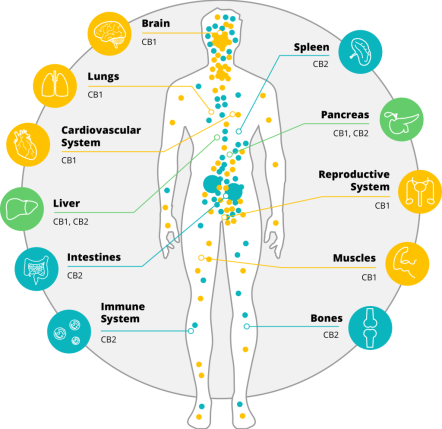
The Endocannabinoid System (ECS), discovered in 1988, is found throughout our own nervous system, immune system, and major organs, to help maintain balance in our body. It regulates pain, mood, inflammation, memory, sleep, hormones, and digestion to support overall wellbeing.
Our body produces the feel-good endocannabinoid, anandamide (AEA), and this can also be stimulated by dark chocolate, truffles, and CBD oil.

Why do we need CBD?
If our body becomes unbalanced or something disrupts this balance such as an injury, disease or deficiency, the ECS shifts from regulating wellbeing to restoring balance and normal functions. However, sometimes the ECS doesn’t work perfectly and lacks endocannabinoids. Adding phytocannabinoids such as CBD can help support the ECS.
How does the Endocannabinoid System Work?
FAQs?
